Reference Architecture
The architecture divides the system into several loosely coupled components, each with its own set of responsibilities.
Realtime
On a real time system, responsibilites have priorities. Linux lets you give priorities to either a process as a whole, or to specific threads that are contained within one process (spoiler: whole process is more manageable).
Some responsibilites our firmware has …
Motor/servo control is probably most important. It only reacts on behalf of somebody commanding, and is not running otherwise.
Emergency off is next. Posts “emergency off” into motor control, which overtakes any commands that are already enqueued.
MQTT and/or CSV logging are relatively unimportant; running them with realtime priority is not immediately obvious. Provided there is enough buffer to hold queued data that arrive in realtime, everthing should be ok :-)
Steering apps (Xbox Remote Control (Manual Driving), or (ACTIVE) Commandline Driving), or automatic driving, should be somewhere in between.
Is sensor reading done synchronously by the steering app? (In the same process?) Technically this would be much easier than to externalize that responsibilty. It would be more logical too, because self-driving control are easier implemented in this way.
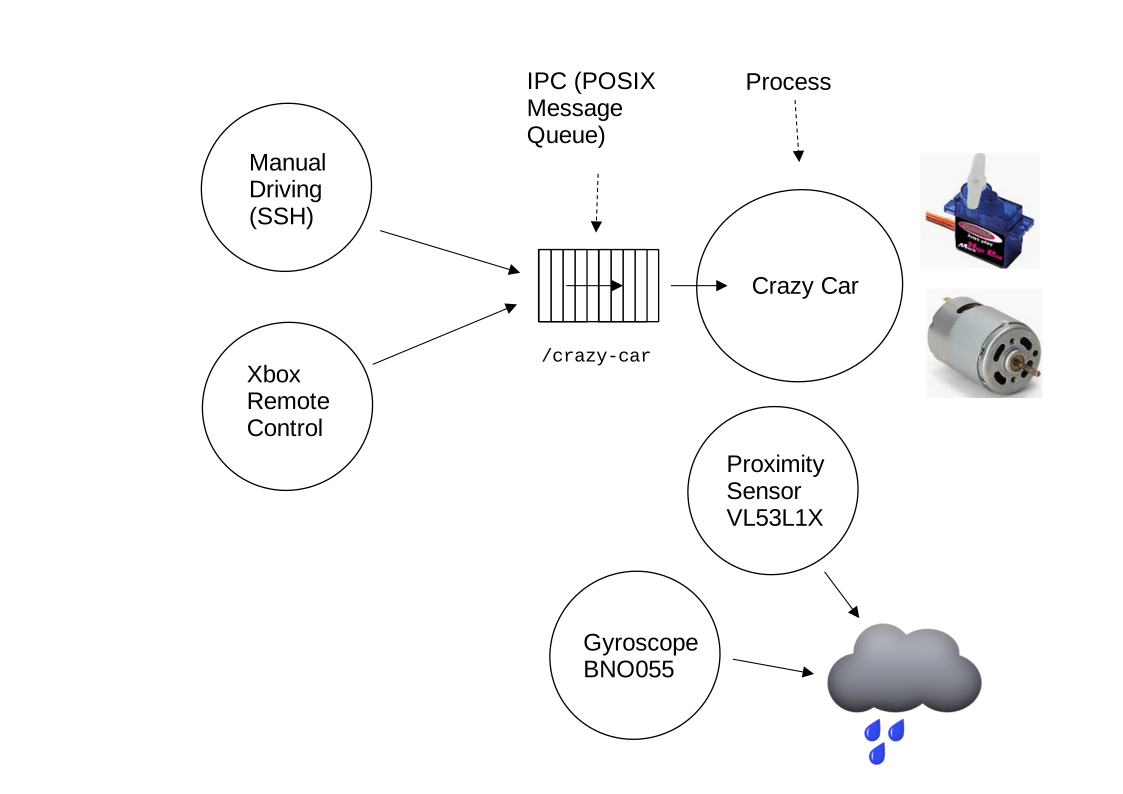
Modularity
Components can be individually combined to provide different setups. One might remote-control a car using an Xbox controller, for example, and not use one of the available self-driving algorithms.
Mix of languages. For example, use Python for non-realtime responsibilities like cloud communication (MQTT)
Testability
In addition to unit tests (which are at the basis of the project), imagine we can record sensor measurements during real drive, and replay them later to reproduce and fix erroneous driving behavior.